TL;DR
- Diversifying nonprofit revenue starts with a mindset shift, not a new channel. The work takes leadership buy-in, real trade-offs, and room for the team to try things that might not work.
- Leaning on one funder, one grant type, or one giving segment puts your mission at serious risk when priorities shift.
- Unrestricted giving fuels flexibility, innovation, and long-term sustainability, but donors need a clear story for how those dollars create impact.
- Communicating impact works best when you pair data with story, letting donors choose how deep they go.
- Small, focused fundraising sprints help stretched teams build early wins that unlock buy-in and momentum.
Picture this: A fundraising team gets pulled into a room. Leadership announces a round of layoffs, and another round is coming if revenue doesn’t climb.
That scenario actually happened to Audrey Cooper earlier in her career, and it’s the kind of story that sticks with a fundraiser (or honestly, anyone) for a long time. It’s also the clearest answer to why every team needs to think seriously about how to diversify nonprofit revenue before the wobble becomes a crisis.
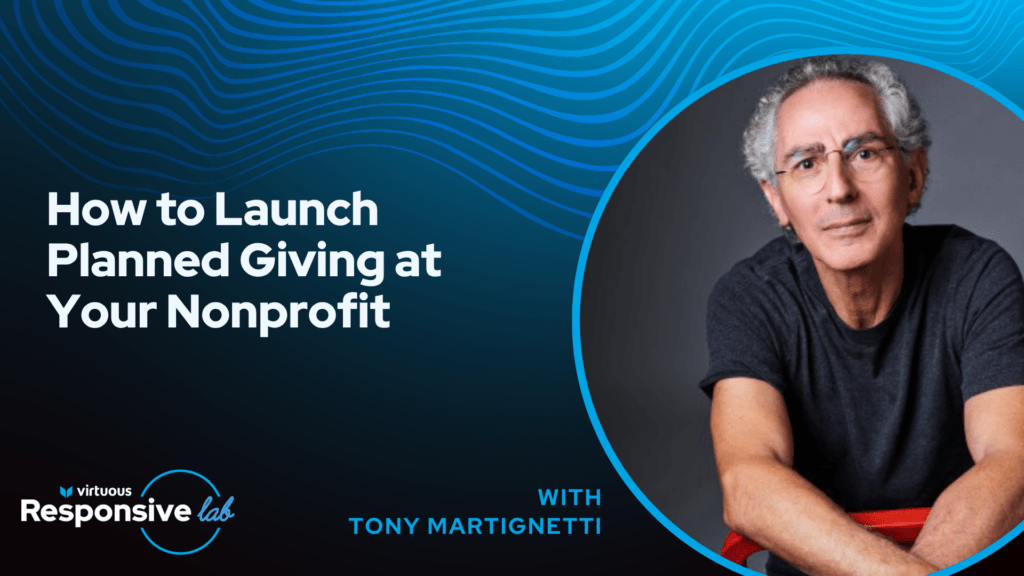
In this episode of The Responsive Lab, hosts Scott Holthaus and Carly Berna sit down with Audrey Cooper, Associate Director of Philanthropy at Evidence Action, to unpack what it actually takes to diversify nonprofit revenue, lean into unrestricted giving, and communicate impact in a way that earns donor trust. Audrey has 10 years in nonprofit development and is currently building the individual giving function at Evidence Action, which raised over $60 million last year across individual philanthropy and institutional partners.
Watch the full conversation here:
We pulled the biggest lessons from that conversation and turned them into a practical guide for any fundraiser feeling the pressure of a concentrated portfolio, a stretched team, or a donor base that needs more balance.
Why Diversifying Nonprofit Revenue Matters More Than Ever
Most fundraising teams don’t build a diversified base from day one. You start with the funders who said yes first, you grow the relationships you have, and before long, a huge portion of your budget depends on a small circle of supporters.
That’s normal. It’s also risky.
Audrey’s layoff moment is the worst-case version of a problem every nonprofit eventually faces. The quieter versions are easier to miss. You might notice a clear opportunity for impact your current funders won’t support. You might feel a desire for more confidence during unstable seasons, which hits especially hard for teams in international development right now. Your growth plans might keep bumping up against the preferences of one or two donors, or you might catch yourself wondering what would happen if a single funder’s priorities shifted overnight.
Any of those signals are worth paying attention to. Understanding your donor retention and the shape of your giving portfolio is foundational to knowing where you’re exposed.
The Real Goal: Sustainable, Confident Growth
Diversification is about building a base stable enough to weather the storm and flexible enough to pursue new opportunities when they show up. Imagine how it would feel for your team to grow sustainably and know that even if a major funder’s priorities changed, they could sustain the work at scale.
4 Steps to Diversify Your Nonprofit Revenue
If you’re hearing this and thinking, yes, this is my team, here’s where to start. These 4 steps work for organizations of almost any size.
1. Commit to the Mindset Shift First
Before you touch a new channel or build a new program, you need buy-in for a different way of working. That means:
- Willingness to do things differently. New investments can change roles, shift external branding, and require time and resources the team doesn’t currently have.
- Willingness to invest before the revenue comes in. Funder cycles often run longer than a year. Relationship building takes even longer.
- Leadership and program time. Buy-in on a whiteboard isn’t enough. People have to actually clear space to do the work, which means doing less of something else.
- Psychological safety on the team. You will fail at some of the new tactics. Cold pitches don’t convert like warm renewals. A proposal acceptance rate that dips while your new-donor count climbs is a sign things are working, not breaking.
That last piece is the one most teams underestimate. Diversification asks teams to accept discomfort in new ways, and leaders have to create an environment where experiments are welcome.
2. Let Data Inform Where You Start
Once the mindset is in place, the next step is looking honestly at your revenue history. Not just the top-line numbers, but the shape underneath them.
Ask how many new donors you actually acquired each year, where they came from, whether their gifts were restricted or unrestricted, and which channels produced lifetime value versus one-time gifts.
This kind of review grounds your strategy in reality. It also helps with something critical: realistic target setting. Ambitious goals sound great in a board deck, but unachievable goals lead to burnout. Good fundraising data lets you set targets that stretch the team without breaking it.
For teams that want to go deeper on this kind of review, donor segmentation best practices and a clear look at portfolio balance in fundraising can help you find the gaps.
3. Run Fundraising Sprints Instead of Spreading Thin
One of the most practical pieces of advice: Pick a few priorities and follow them all the way through.
Audrey described running literal fundraising sprints at a previous organization, where the team picked one focus area, worked it fully, reviewed what they learned, and chose the next move. That approach works at the team level, and it works just as well at the individual fundraiser level.
Most fundraisers already have known opportunities sitting in their database. A referral they’ve been meaning to ask for, a prospect on the wishlist they haven’t reached out to, a warm connection from a board member that never got a follow-up.
A sprint approach means picking two or three of those and trying everything reasonable to move them forward. Have you asked your current donors if they know the prospect? Have you looked up events where they might appear? Have you sent three emails before assuming silence equals no?
Audrey shared a moment where she emailed a prospect three times before getting a response, and that response turned into a promising second conversation. Her takeaway came from working with fundraising consultants who taught her team the phrase “don’t make assumptions for your donors.” If they haven’t said no, keep going. You haven’t fully explored the relationship until you’ve qualified it one way or the other.
Following through creates early wins, and early wins build team and leadership buy-in for bigger investments. For more tactical ideas, fundraising strategies and fundraising ideas for nonprofit organizations are both worth revisiting as you plan your sprints.
4. Invest in Brand Building Even Before You See ROI
At Evidence Action, one way the team diversifies is by leaning into smaller-dollar donor acquisition, even though that segment currently represents a tiny fraction of overall revenue. Direct ROI will take time. There’s no guarantee the program will become a major channel.
But the brand-building work produces immediate returns across the revenue portfolio. Producing digital content, honing the team’s storytelling, and articulating the mission more clearly all make the organization more attractive to every kind of funder. A diversification effort improves the storytelling muscle that fuels every channel, which is why even channels that might not scale are worth the investment.
How to Make the Case for Unrestricted Giving
When we talk about diversifying nonprofit revenue, unrestricted giving is one of the most valuable levers and also one of the hardest to unlock. Donors often gravitate toward specific programs because they want to know where their money is going.
The sector is trending in a better direction. The movement toward trust-based philanthropy has pushed back against the overhead-ratio obsession, and as Audrey noted, evaluator groups like Charity Navigator have started speaking out about how those ratios can misrepresent what it takes to run an effective organization.
Still, making the case falls on the fundraiser. Here’s how Audrey frames it.
Reframe Overhead as Impact Cost
A global finance team is technically overhead. But the counterfactual, the scenario where that team doesn’t exist, is an organization that can’t deliver any of its work. Helping donors see administrative costs as impact costs starts with specific examples, not generic pitches about operational efficiency.
Let Donors Follow Programs Without Restricting Dollars
Even donors who give unrestricted often care about specific programs. At Evidence Action, donors can visit and learn about a program like maternal health while still letting the organization direct dollars to the areas of greatest need. The donor still sees their impact expressed through a specific story they care about.
Define Internally How You’ll Deploy Unrestricted Dollars
One of the most compelling parts of the conversation was how Evidence Action defines internally where unrestricted dollars go. Having a clear framework gives fundraisers something concrete to show donors. Their four categories:
- Catalytic, time-sensitive opportunities where moving fast matters more than running a restricted campaign. Working with governments in 10 countries, some opportunities simply won’t wait.
- Innovation, including testing and scaling the next generation of health interventions, where not every bet will pay off.
- Sustainability investments, like supporting government transitions, so programs keep running long after the nonprofit exits.
- Operational foundation, including healthy reserves and investment in people and systems.
That clarity turns unrestricted giving from a vague ask into a story about leverage. It also forces the organization to actually use those dollars well, which is what keeps the value proposition true over time.
How to Communicate Impact That Combines Data and Story
One of the oldest fundraising debates is whether data donors and story donors need different content. Audrey’s take, and one we agree with, is that they don’t. Story tells donors the human reason the work matters. Data shows them how that impact actually happens, what it costs, and what it produces.
Use Layered Content So Donors Can Direct Their Journey
In Evidence Action’s end-of-year impact report, program data sits next to human stories. Donors who want to go deeper can expand a dropdown for a technical update or click through to a video from someone who benefited from the work. Nobody is forced into a single lane.
The approach works in written content, but it also works in major donor conversations. Audrey described learning to stop trying to cram every talking point into one meeting. Start with a story, and donors will often ask how it happened. Start with data, and donors will often ask what that looks like for a real person. Either entry point leads to the same place, which Audrey described as different doors into the same house.
Moves management and building trust with donors both get easier when you stop treating data and story as competing strategies.
Keep the Human Element Front and Center
The reason most nonprofits exist is to help people, and that impact often happens far away from where donors live. Storytelling is what closes the distance. Audrey gave a concrete example from Evidence Action’s work: 4 cents is all it takes for a child to get a deworming pill that removes parasitic worms, letting that child attend school healthy for a full year. That’s the kind of detail that lets a donor picture the person their gift is reaching. Specific numbers, real names, and a clear line from the gift to the outcome are what make generosity feel tangible.
Where Technology Fits in Sustainable Fundraising Growth
Scaling revenue to $60 million is hard to do without the right technology. For Evidence Action, Audrey described the biggest wins coming on the operational side. Prospect research tools, AI for nonprofits, and internal efficiency gains have all helped the team sustain revenue at scale without adding proportional headcount. AI writing coaches help non-fundraising colleagues prepare for donor conversations and write reports, which frees the fundraising team up for relational work.
This is where modern fundraising platforms earn their keep. Hyper-personalized stewardship used to require a huge team. Now, a responsive nonprofit CRM that connects giving history, engagement, and donor context in one place makes it possible to run a sprint, follow through on every lead, and tell the layered story that turns a first gift into a lifetime of generosity.
If you’re thinking about how to diversify nonprofit revenue and your current tech stack is getting in the way, it might be time to look at what a modern donor management platform could do for your team.
Being Bold in Fundraising Conversations
We want to close with the piece of advice that landed hardest in the episode.
Audrey described her donor relationships as collaborative and much closer to education than to the old frame of asking for something people don’t want to give. In her words:
“Sometimes my relationships with donors feel very collaborative and much more like education. We all care about the same impact, and in fact, the donor can’t have that impact without the work that we do. We’re inviting them into our mission with us to join us as partners. And when you remember that framework, it really makes it easier to be bold and to get out there and to ask.” — Audrey Cooper, Associate Director of Philanthropy, Evidence Action
That framing is why diversification works. The donor isn’t being asked to hand over something they don’t want to give. They’re being invited into a shared story they can’t create without you. Boldness gets a lot easier when you believe that.
Ready to Build a More Diversified Fundraising Program?
If your team is ready to diversify nonprofit revenue, deepen donor relationships, and scale the work without burning out, Virtuous CRM+ connects your data, automation, and donor intelligence in one system so you can run fundraising sprints, follow up on every opportunity, and tell the layered story that moves donors from interested to invested.
And for teams ready to accelerate major gifts work, Virtuous Momentum brings agentic AI into your daily workflow to triple gift officer productivity and unlock mid-level giving.
FAQs
What does it mean to diversify nonprofit revenue?
Diversifying nonprofit revenue means building multiple funding sources, like individual giving, institutional grants, mid-level programs, and recurring gifts, so your organization isn’t dependent on a single donor or channel to sustain its mission.
What’s the first step to diversify my nonprofit’s funding?
Start with a mindset shift and review your historical revenue data. Look at new donor counts, where gifts came from, and whether they were restricted or unrestricted. That data grounds your strategy and informs realistic targets.
How do I talk to donors about unrestricted giving?
Reframe overhead as impact cost, and show donors a clear framework for how unrestricted dollars get deployed. Evidence Action uses four categories: catalytic opportunities, innovation, sustainability, and operational foundation. A framework makes the ask concrete.
What are fundraising sprints?
Fundraising sprints are short, focused cycles where a team picks a few priorities, executes fully, reviews the results, and chooses the next move. They’re an alternative to spreading thin across too many goals at once.
How should nonprofits combine data and story when communicating impact?
Use layered content so donors can choose how deep they go. Pair program data with human stories in written reports, and in major donor conversations let one lead naturally to the other.
How does technology help with sustainable nonprofit growth?
Technology lets small teams deliver personalized stewardship at scale, run efficient operations, and surface the right prospects at the right time. Modern fundraising platforms, AI tools, and CRMs that connect data across channels make it possible to grow revenue without proportionally growing headcount.