Technology and nonprofits: Now that’s an interesting combination. So, what comes to your mind when you think of those two words together?
→ Depending on the size or budget of your nonprofit, you might be used to limitations when it comes to tech.
→ Or maybe to you, technology and nonprofits together mean an endless list of new and exciting possibilities.
→ Or with the rise of AI in fundraising, you might even feel a bit apprehensive or scared.
Whether technology tends to make you feel frustrated, confident, intimidated, or a combination of all three…I think we can all agree: Technology has significant potential to help those who help. AKA nonprofits.
In this article, we’ll explore 6 essential tech tools for nonprofits who want to stay ahead of the curve.
And everything you need to know about technology and nonprofits, so you can get ahead for the next year (or five!).
Much of this blog’s content comes from a session we hosted at our 2025 Responsive Nonprofit Summit: “The New Nonprofit Tech Toolkit: Preparing Your Organization for the Next 5 Years.”
In the session, Erin McHugh Saif, Chief Product Officer at Microsoft Tech for Social Impact, speaks with our VP of product, Jason VanLue, about the intersection of technology and nonprofits. And how to prepare your nonprofit for the next 5 years using innovative, updated tech!
You can see our podcast covering this content below.
Technology and Nonprofits: 6 Tech Tools Nonprofits Can Use to Level Up Their Fundraising
1. Nonprofit CRM

Why it matters: When people think about technology and nonprofits, a CRM is one of the first tools that comes to mind. A CRM is the operational heart of any modern nonprofit. It holds your donor data, tracks interactions, and automates the follow-ups that build long-term relationships. The right CRM listens to donor behavior, connects them to the right campaigns, suggests the next best action, and learns over time what drives generosity.
How to stay ahead: Use a CRM that’s built around fostering authentic relationships with your donors. Look for one that can automate personalized donor journeys based on real-time behavior, not just lists and labels.
Try this: Virtuous CRM+ helps fundraisers automate meaningful outreach, scale donor communications, and build deeper connections through behavior-based triggers and real-time workflows.
2. Wealth Screening & Donor Intelligence Tools

Why it matters: You can’t steward what you can’t see. Wealth screening and predictive intelligence tools help you surface high-potential donors, reduce guesswork, and prioritize outreach where it matters most.
How to stay ahead: Combine third-party wealth data with your own engagement signals. Move from reactive reporting to proactive fundraising. Prioritize donors ready to upgrade, lapse, or give planned gifts…before the moment passes.
Try this: Virtuous Insights delivers AI-powered wealth, capacity, and engagement data directly inside Virtuous CRM+, so you can act on donor signals instantly without spreadsheets or data wrangling.
3. Fundraising Assistants

Why it matters: Major gift officers are relationship experts. But most spend too much time logging notes, sending follow-ups, and managing task lists. AI fundraising assistants can help free up time, keep relationships warm, and deliver timely nudges that deepen engagement.
How to stay ahead: Empower your team with AI that can prioritize portfolios, generate personalized email drafts, and log every interaction automatically. Let your team focus on what they do best: connecting with donors.
Try this: Virtuous Momentum is an AI-powered fundraising partner that helps mid- and major-gift officers scale their portfolios, prioritize daily tasks, and deliver authentic outreach…without the administrative burden.
4. Analytics & Data Management
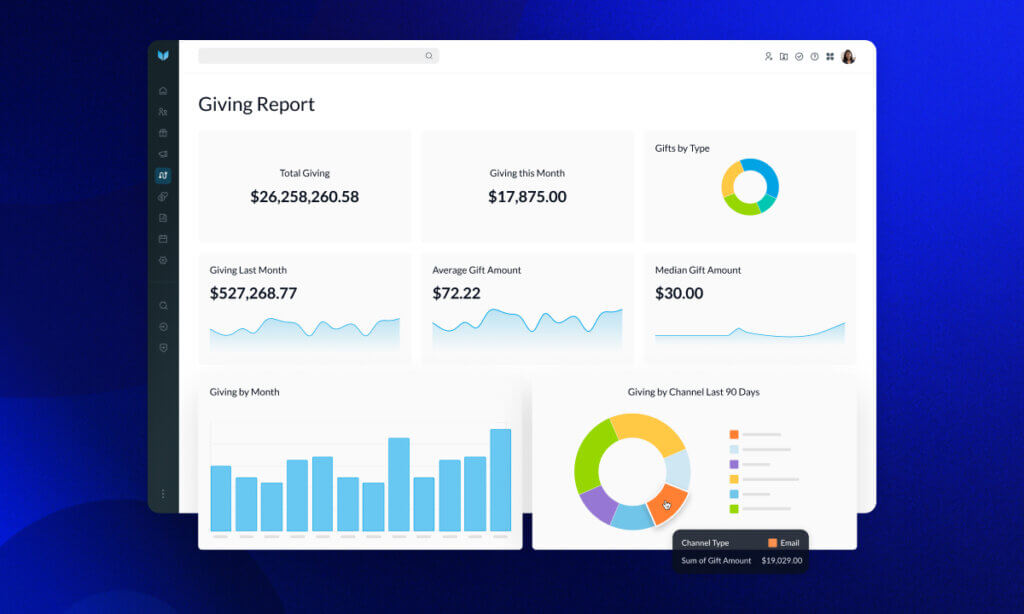
Why it matters: If data is the fuel of responsive fundraising, analytics is the engine. Nonprofits need clear, accessible insights to drive segmentation, strategy, and decisions.
How to stay ahead: Move beyond static dashboards. Use tools that reveal donor trends, forecast behavior, and surface insights based on both historical data and real-time actions. Make smarter decisions, faster.
Try this: Virtuous Analytics gives you intuitive dashboards, segmentation tools, and built-in forecasting that help your entire team act on data with relationships in mind.
5. Giving Forms & Donation Tools
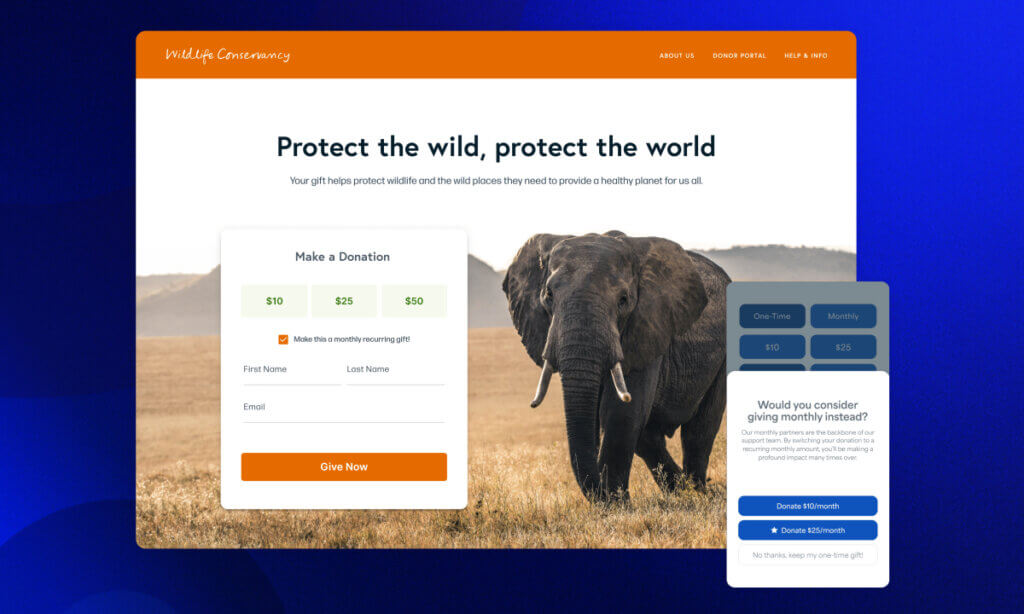
Why it matters: First impressions count. Your giving form is often the first digital handshake between a donor and your cause. It should be fast, intuitive, and designed to increase conversions.
How to stay ahead: Use mobile-first, customizable donation forms that adapt to your campaigns and donor segments. Make recurring giving the default and optimize for generosity…not just transactions.
Try this: Virtuous Raise powers custom, mobile-optimized donation experiences that grow giving, boost recurring revenue, and make generosity feel effortless.
6. Volunteer Management

Why it matters: Volunteers are some of your most passionate supporters. But managing them manually can lead to burnout for both staff and volunteers. An integrated volunteer platform helps you recruit, track, and engage more effectively.
How to stay ahead: Use a system that connects volunteer activity to your donor CRM, helping you see the full picture of each person’s engagement.
Try this: Virtuous Volunteer helps you mobilize volunteers with easy sign-ups, shift tracking, and integrated engagement data, so you can steward volunteers like the generous supporters they are.
Technology and Nonprofits: Where Are We With AI?
The discussion about technology and nonprofits inevitably leads to AI. We’ve already talked about AI tech for nonprofits, such as wealth screening tools and fundraising assistants. But let’s address some common questions nonprofits typically ask when considering adding AI into their tech stack.
Thinking ahead to the next 5 years, it’s important to consider:
How important is AI for nonprofits?
With technology and nonprofits, specifically, AI can vastly change the amount of time you spend on manual tasks while fundraising and communicating with your donors. It can also help create workflows for your internal team.
So, in short: AI is very important for nonprofits. It can change your entire approach to fundraising for the better.
Should nonprofits be paying attention to AI?
While it may seem that using AI at your nonprofit in any capacity is “getting ahead,” it’s important to remember that this won’t always be the case.
In fact, using AI to gain intelligence will soon be viewed as a commodity. So much so that organizations that don’t move quickly to adopt AI into their processes might find themselves behind.
So yes, nonprofits should be paying attention to AI.
How can nonprofits keep up with data privacy issues?
In an era where trust is everything, nonprofits must treat data privacy not as a checkbox but as a strategic advantage. That means writing donor-facing privacy policies in everyday language, embedding privacy at every step of your tech design, and proactively defining how AI will (and won’t) be used in service of your mission.
Use sector resources and peer networks to guide your policy frameworks, and be ready to safeguard sensitive data with methods like anonymization or privacy-enhancing tech. Most importantly, bring in the voices of those you serve and ethics experts because AI that can scale must also prioritize accountability, context, and ethics.
How can I adapt quickly with so many model changes?
The only constant with technology and nonprofits is change. And nonprofits that keep pace with AI aren’t chasing every new model; they’re building agile muscle.
Start with a team-wide playbook: use AI outputs as helpful drafts, not final answers, and always fact-check before sharing. Invest in smart change management: train your staff, pilot in small pods, gather feedback, and iterate fast. Equally important: balance fluidity with structure.
Empower program teams to move quickly while keeping a central vision. Ground your AI journey in a strong data foundation and a clear mission roadmap. And finally—don’t go it alone. Tap into peer networks to learn and adapt smarter, together.
Is Humanity Still Relevant?
But at the core of every nonprofit is the humans who care enough to keep it running. So, if the relationship between technology and nonprofits requires AI now, does that mean the human disappears?
Not at all.
When used well, AI allows your team to focus on connection instead of clicks.
For example:
→ AI agents can engage every website visitor with tailored messaging.
→ Donor segmentation can now be built and analyzed using natural language, not legacy tools only one person on your team understands.
→ Zoom meetings can be auto-transcribed, allowing staff to stay present instead of distracted by note-taking.
→ Field workers can provide better trauma care, knowing AI is capturing the context and data in the background.
What If You’re Not Ready for AI?
Let’s be real. The relationship between technology and nonprofits has always been complicated. Not every organization feels ready to jump headfirst into AI. If your data is messy, your systems are disconnected, or your team is still burned out from the last tech change, you’re not alone.
Here’s how to start making progress anyway:
1. Start by identifying the most cumbersome jobs.
Which tasks drain your team the most? Where are you seeing duplication, delays, or missed opportunities? That’s where tech can help. And the same goes for your data. Pinpoint what systems or reports feel the most painful.
2. Look for small, strategic wins.
You don’t need to overhaul your tech stack overnight. Start by asking: What are two apps we need to unify our data? Where can we get better visibility across systems? Then bring your staff together, get aligned, and make progress on data before layering in new tools.
3. Model AI usage openly, especially as a leader.
Normalize the conversation. Talk about the AI tools you’ve tried, the results (or struggles), and what you’re learning. This gives your team permission to experiment and demystifies the process.
4. Avoid the shadow AI trap.
Nonprofit workers are eager, resourceful, and deeply mission-driven. That means they’re more likely to bring AI tools into their work without oversight. But that can lead to unintentional data training or exposure. It’s better to explore AI as a team. Make data governance and shared experimentation part of the journey.
5. Define the outcome before deploying the tool.
It’s easy to jump into AI without clarifying the job to be done. Whether it’s automating a new donor welcome series or reducing reporting time, get clear on the outcome you’re solving for. Then, find the tech to match.
Even if you’re not ready for AI today, the steps you take to clean your data, unify your systems, and clarify your team’s priorities will set you up to use AI more strategically tomorrow.
Virtuous: Where Technology and Nonprofits Intersect
From CRM and automation to AI-powered donor intelligence and personalized giving experiences, Virtuous delivers one connected platform to power responsive fundraising. With Virtuous CRM+ at the center, your team can unify data, automate meaningful outreach, and act on real-time donor signals…all while reducing burnout and deepening relationships.
One platform. Built for teams who believe generosity has no limits.
Explore the Virtuous Suite →