Last month, Virtuous released its first Benchmark Report. As a previous customer, I was super excited about this. When I was a fundraiser, I would constantly look at benchmark reports. I used them to figure out where we needed to improve and where we were doing well.
Often, as a fundraiser, it can feel like working in an echo chamber, where you only hear what’s happening in your organization and what your leadership team or board is saying, and you don’t have any outside perspective.
A benchmark report can help with that by showing you what metrics to pay attention to, and what the industry standards are so you can see how you measure up. What I also really find helpful with this report is it shows the calculations used and tactics to try to improve these metrics. That way you can determine what your metrics are and get some ideas to try for your organization.
If you haven’t had a chance to check out the report, you can download it here. But as a quick highlight, I thought it might be helpful to share five takeaways I found valuable:
1. Donor Retention is Trending Up
Donor Retention has been trending down over the past few years, but looking at a 12-month rolling average through June 30, 2024, donor retention is trending up. Hopefully this is a positive sign for the future. It was also encouraging to see that the top quartile of organizations had a 68.5% donor retention rate. These top-performer numbers are helpful when you’re trying to determine what goals you should have for your internal metrics.
Takeaway: Set your donor retention goals higher and focus on re-engaging lapsed donors.
2. The Importance of Average and Median Gift
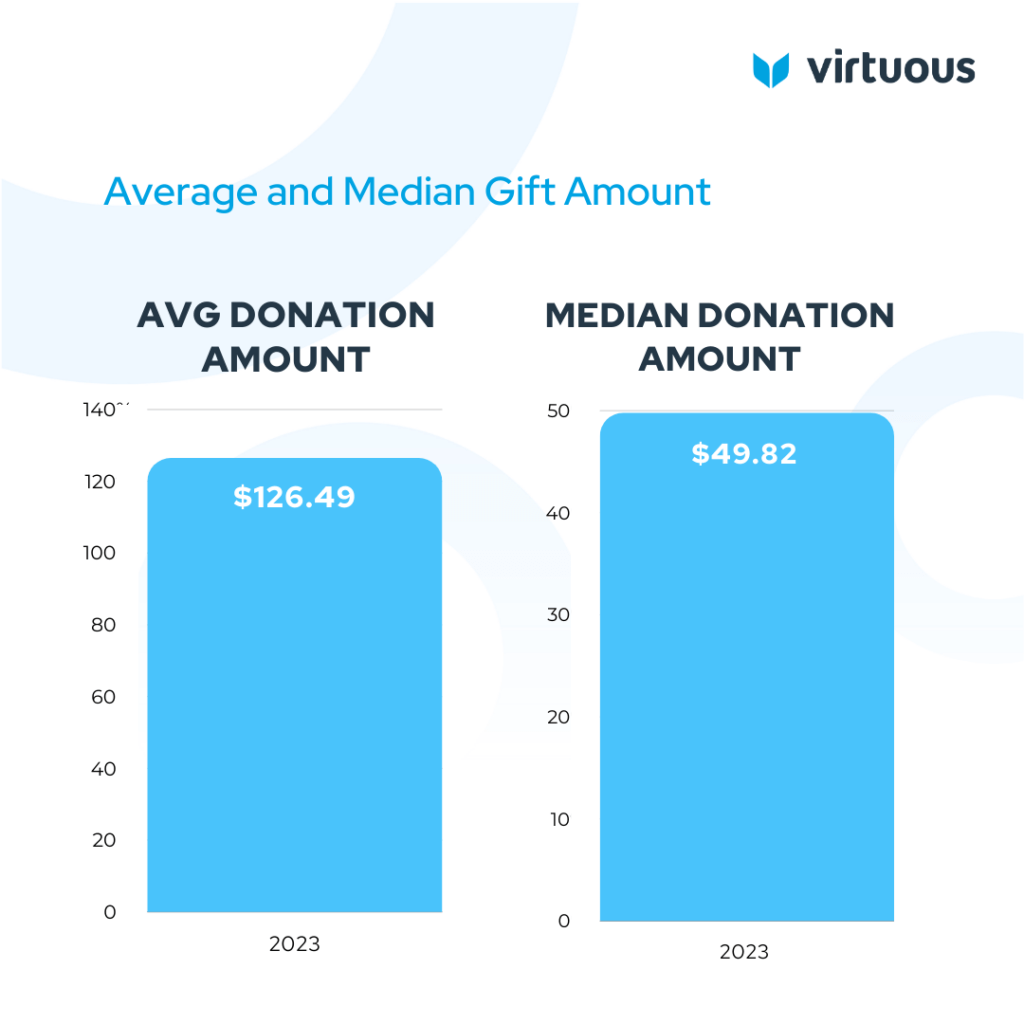
The report looked at both average and median gift but the median gift of ~$50 was an important number to note. This shows that donors most often are giving around $50 and this would be a great number to test on donation forms and direct mail ask strings to see if you can increase your median gift size. The top performers had a median gift of $110, which is a great stretch goal.
Takeaway: Test changing your gift arrays based on your median gift size.
3. An Uptick in Recurring Giving
If you’ve been in the nonprofit space recently, you’ve probably heard that recurring giving is incredibly important because it is sustainable and consistent.
What’s not shown in the report is that recurring giving has been steadily climbing over the last five years, but currently, ~14% of giving is coming from recurring donations. This is encouraging and speaks to the fact that nonprofits should continue to take advantage of the subscription economy trends and implement a monthly giving program. Top performers had 37.6% of total revenue coming from recurring giving, which shows the potential.
Takeaway: Do a secret shopper audit of your monthly giving program to see what you can improve.
4. Portfolio Balance in Fundraising
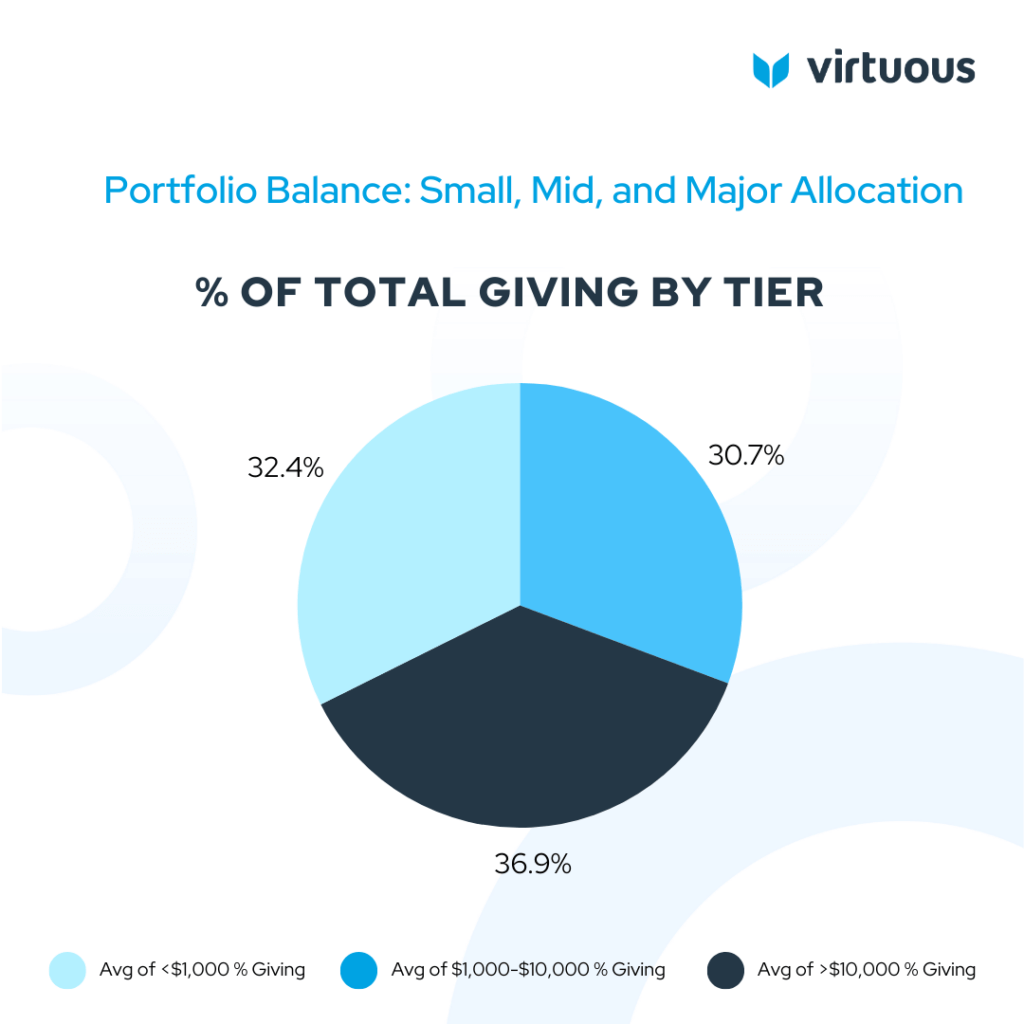
A metric that you often don’t see in a benchmark report is how a donor file is balanced between giving tiers. The average organization had 40% of giving from major donors which was surprising. It’s important to balance the donor file so that you aren’t getting too many major donors or too many smaller donors.
Still, if you have under 40% of your donors coming from the major donor area, this would be an important area of focus. On the flip side, if you have more than 40% coming from your major donor area, you may want to start focusing on recruiting smaller givers to help balance out the portfolio.
Takeaway: Based on your portfolio balance, determine whether you should focus on increasing major donors or smaller donors to improve your balance.
5. New Donor Acquisition
The past few years have been tough for nonprofits due to the pandemic, the economy, and other world events. Many nonprofits have slowed down investing in new donors. The report showed that 27.6% of active donors came from new donors. This varied by size of organization, and there are a lot of factors that play into this but this is an important number to consider for your nonprofit.
It would be helpful to look back over the past five to seven years at your new donor acquisition investment and see if you have recruited enough new donors to cover for the donors who lapse. Not shown in the report is the cost to acquire a new donor, but when looking at new donor acquisition, you want to make sure the investment is efficient and you are acquiring the right types of donors that will stay with your organization for the long term.
Takeaway: Look at your organization’s retention and the percentage of new donors coming from active donors to see if your net donors is decreasing overall and determine the most efficient channels to spend acquisition dollars.
Learn More to Grow Your Nonprofit
There were a lot of great findings in the report, and if you’re interested, there are also different reports for different types of causes so you can see how your organization stacks up to your specific area.
The goal is to help identify areas to improve and areas to celebrate with your team and also bring some clarity internally about what metrics to look at and how you compare to other organizations. It’s always good to get another perspective so you can ensure that you are making the right decisions about your fundraising.

To learn more about how Virtuous can help improve your fundraising metrics, request a demo.