TL;DR:
- Nonprofit brand strategy has to come before fundraising, not after it.
- Joni & Friends flipped their budget to 60% brand awareness and 40% fundraising to fuel long-term growth.
- Internal alignment is the often-skipped first step before any external brand work begins.
- A brand audit across every touchpoint reveals the inconsistencies that quietly erode trust.
- Meaningful brand growth takes 4 to 5 years, and small, measurable wins along the way are what keep leadership on board.
For many nonprofit fundraising teams, the pressure to hit revenue targets this quarter makes long-term thinking feel like a luxury. Brand awareness? A nice-to-have. A recognizable visual identity? Something to revisit when the budget allows. The real work, the thinking goes, is getting donors to give.
But what if that framing is the very thing holding your organization back?
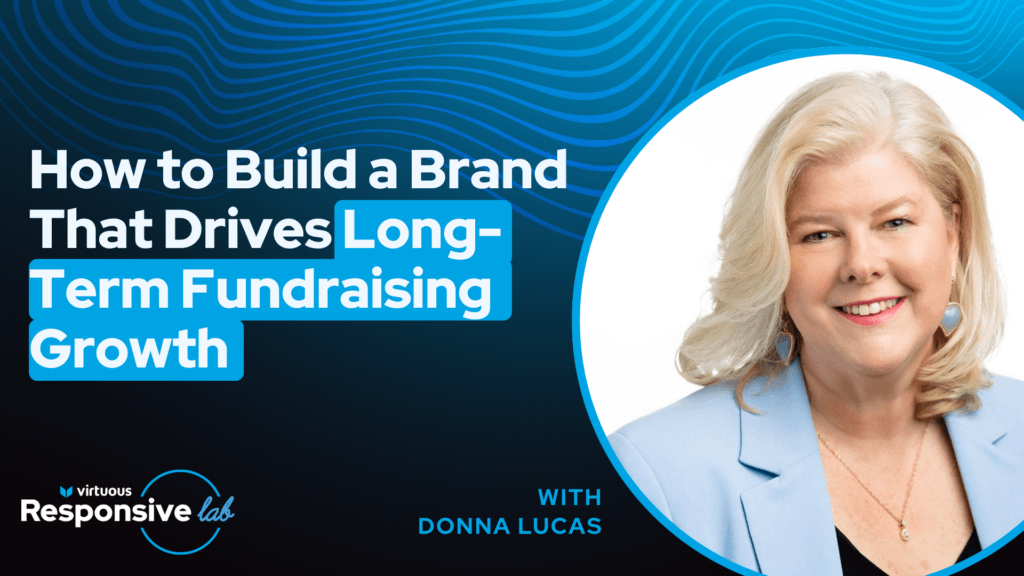
We explored this tension on a recent episode of The Responsive Lab, where hosts Scott Holthaus and Carly Berna sat down with Donna Lucas, Chief Marketing and Development Officer at Joni and Friends, a global disability ministry. Donna spent decades building brands in the for-profit world at companies like Adidas, Benetton, and Dickies before pivoting into nonprofit leadership. That crossover gave her a sharp perspective on what most nonprofits get wrong about brand, and a practical playbook for getting it right.
We’ve distilled our time with her into 6 steps you can put into practice at your own organization.
Catch the audio of this podcast here:
Or watch the video version:
6 Steps to Building a Nonprofit Brand Strategy That Drives Fundraising Growth
Step 1: Recognize the Warning Signs That Your Brand Isn’t Working
Before you can build a nonprofit brand strategy, you need to see clearly where things stand today. And for a lot of organizations, the symptoms are hiding in plain sight.
Here’s what to look for:
- Siloed channels. Your social team, email team, direct mail team, and events team are all doing their own thing with no shared messaging or integration. There’s no multichannel fundraising strategy tying them together.
- Fundraising drives all communication. Everything going out the door is transactional: an appeal, a thank you, a results update, another appeal. There’s no room for connection, storytelling, or audience building.
- You’re only talking to existing donors. Your communication speaks inward to people who already know you, rather than inviting new audiences into your mission.
- No overarching strategy. Instead of a unified brand direction, you have a long, disconnected list of tasks.
These patterns are common. And they’re easy to miss, especially when the channels producing revenue feel like they’re “working.” But if your organization is only known to the people who already give, your audience is shrinking every year, whether you realize it or not.
As it came up in the podcast, one board member once called Joni and Friends “the best-kept secret in disability ministry.” It was meant as a compliment. But in fundraising, invisibility is a growth problem.
Step 2: Reframe Brand Investment as Risk Management
The biggest obstacle to building a nonprofit brand strategy isn’t budget. It’s perception. Most leadership teams hear “brand awareness spending” and think risk. The conversation has to flip that framing.
The real risk is doing nothing.
Here’s how to build the case:
- Lead with the cost of inaction. What happens to your donor base in 5 years if you don’t expand your audience? Declining acquisition, aging donors, and weakening donor retention. Make that future concrete and visible.
- Don’t pitch theory. Pitch consequences. No senior leader wants to preside over a slow decline. Frame the conversation around what’s at stake, not what the brand could do in an ideal world.
- Think in 3 to 5-year windows. The for-profit world doesn’t plan year to year, and your brand can’t grow that way either. Even small shifts in how leadership evaluates timelines can open the door to brand investment.
- Protect what’s already working. This is key. Keep funding the revenue-generating channels (direct mail, email) that leadership counts on. Then carve out a separate allocation for brand building alongside them, not at their expense.
At Joni and Friends, this approach led to a bold move: a 60/40 budget split, with 60% going toward brand awareness and 40% toward direct fundraising. It worked in part because the reliable channels stayed untouched, giving leadership a stable foundation while the brand work took root.
That kind of allocation isn’t typical. But the framing behind it, risk versus reward over a multi-year horizon, is the right starting point for the conversation at any organization.
Step 3: Align Your Team Before You Spend a Dollar Externally
This is the step most organizations skip. And it’s the one that creates the most friction down the road.
Once you get leadership buy-in, the instinct is to jump straight into tactics. Redesign the logo. Launch a campaign. Create a video. Those things feel productive because they’re visible. But if your internal team isn’t aligned on where the brand is headed, you’re fighting two battles at once: one on the outside and one on the inside.
Your staff are your most accessible brand ambassadors. They interact with more people than your marketing budget will ever reach. If they don’t understand and believe in the direction, your external messaging is working against itself from the start.
Here’s the sequence to follow before any external work begins:
- Develop your core brand narrative. Get clear on who you are, why you exist, and what makes you distinct. This isn’t flashy work. It’s foundational. But every message, every campaign, and every channel decision should flow from it.
- Communicate it internally first. Share the narrative with your full staff. Build genuine alignment, not just top-down awareness. Give it time to sit. Let people ask questions, push back, and ultimately own the direction.
- Audit your brand across every touchpoint. Look at how your organization shows up in email, direct mail, social media, phone calls, events, and printed materials. Ask one question: is it consistent?
That audit can be revealing. At Joni and Friends, it uncovered 19 local field offices, each running with their own interpretation of the brand: different colors, different fonts, different messages, all justified as “locally appropriate.” The audit exposed fragmented messaging, siloed communication, and channels that were quietly draining resources.
Think about the nonprofits that top national trust rankings: organizations like St. Jude’s and Make-A-Wish, who have consistently held spots on Morning Consult’s Most Trusted Nonprofits list for years running. [1] Their consistency isn’t accidental. It’s the result of brand discipline repeated over many years. Consistency is what builds trust. And trust is what builds a donor base.
Step 4: Build an Audience Before You Make an Ask
Here’s where most nonprofit brand strategies stall: the temptation to start asking for money the moment you see traction. Resist it.
Growing an audience and fundraising from that audience are two different phases. Blurring them too early undermines both.
At Joni and Friends, the team chose Instagram as their primary channel for experimentation and audience building. For two full years (2020 and 2021), they made zero fundraising asks on social. No donation appeals. No volunteer recruitment. Just connection.
Here’s what that looked like in practice:
- They studied the platform. Instead of repurposing external content, they created natively within Instagram using in-platform tools, which the algorithm rewards.
- They shifted the tone. Messaging moved from transactional and program-focused to emotional and human. The founder, Joni, became a vehicle for introducing the ministry to a new generation.
- They treated engagement like relationship building. When they eventually added a dedicated staff person to respond to every comment and DM personally, treating each one like an inbound phone call, engagement rates reached levels that benchmarked 10 to 1 over comparable major nonprofits.
The pandemic, which derailed many organizations, actually created space for this work. Without the pressure to market programs or recruit volunteers, the team had bandwidth to focus entirely on cultivating community.
When they finally started investing in social in 2022, the first move wasn’t advertising. It was hiring a dedicated staff person to cultivate relationships through comments and direct messages. Paid social came after that. Revenue followed: a 12% increase in fundraising revenue in the first year after the brand flip in 2019. And while direct mail has continued its industry-wide decline and email has plateaued, digital and social fundraising have grown every year since.
The lesson? Cultivation comes before the harvest. Invest the time to build the relationship first, and the giving follows. (For more on structuring that progression, explore how to build effective donor journeys.)
Step 5: Measure Progress with Practical, Not Perfect, Metrics
Measuring brand investment is the part that makes CFOs nervous and fundraisers skeptical. And honestly? You won’t see dramatic results quickly. At Joni and Friends, meaningful results took four to five years to materialize.
But “long-term” doesn’t mean “unmeasurable.” You’re not flying blind while the strategy builds. Here’s what to track along the way:
- Follower growth as a proxy for audience expansion
- Engagement rates as a signal of community health and content resonance
- New donor acquisition and the specific channels driving it
- Fundraising revenue across all channels, tracked over rolling multi-year windows
- Momentum markers like viral content or spikes in organic reach
You don’t need expensive brand awareness studies. You need practical signals that tell you whether your audience is growing, whether people are connecting with your message, and whether that connection is eventually converting to support. (For a broader look at what to measure, see our guide to fundraising KPIs every nonprofit needs.)
And here’s what’s worth noting: momentum builds its own internal advocacy. When your broader staff and leadership team feel the energy of a growing brand, when they see engagement climbing and content breaking through, staying the course gets a lot easier. Those small wins compound. They build organizational confidence. And they buy you the time a long-term strategy requires.
Step 6: Start Small If You’re Facing Pushback
Not every organization is going to approve a 60/40 budget flip in a single meeting. That’s okay. The principles here work at any scale.
If you’re facing heavy resistance, here’s where to start:
- Frame the risk. Even a short conversation about what your donor base looks like in 5 years without audience expansion can shift the energy in a room.
- Propose a small test. Pick one channel. Set a 6-month experiment. Define what you’ll measure. Prove the concept before asking for a larger commitment.
- Don’t disrupt what’s working. Keep the reliable channels funded. Carve out space for experimentation alongside existing programs, not instead of them.
- Let the small wins make your case. Early results from a small test are your best argument for a larger commitment. Share them with leadership as you go.
The goal isn’t to overhaul your organization overnight. It’s to create enough room to prove that building an audience leads to building revenue.
Build the Relationships That Build the Revenue
Nonprofit brand strategy isn’t a distraction from fundraising. Done well, it’s what makes sustainable fundraising possible. The organizations that show up consistently, communicate with a clear and unified voice, and invest in audience building before they make an ask, those are the organizations that grow through market shifts, leadership transitions, and even global pandemics. (Looking for more ways to build that kind of resilience? Check out our guide to fundraising strategies.)
If you’re looking for a platform that helps you move from one-off campaigns to a relationship-driven fundraising strategy, Virtuous CRM+ was built for exactly that. It connects your donor data, automates meaningful outreach, and gives your team a complete view of every supporter so you can nurture relationships at scale, not just manage transactions.
Schedule a demo to see how Virtuous can support your long-term brand and fundraising strategy.
Frequently Asked Questions
What is nonprofit brand strategy and why does it matter?
Nonprofit brand strategy is the deliberate process of defining who your organization is, why it exists, and how it communicates that consistently across every channel. It matters because trust, the foundation of donor relationships, is built through consistency over time.
How much of a nonprofit marketing budget should go to brand awareness?
Joni and Friends allocated 60% of their marketing budget to brand awareness and 40% to direct fundraising. The key is framing the risk not as overspending on brand, but as the long-term cost of remaining invisible to new audiences.
How do you make the case for brand investment to nonprofit leadership?
Focus on the risk of not investing, particularly donor base aging, declining acquisition, and organizational irrelevance. Frame brand building as a multi-year strategy that runs alongside existing revenue-generating channels, not instead of them.
How long does nonprofit brand strategy take to show results?
Four to five years to see meaningful, compounding results. But smaller milestones like follower growth, engagement rates, new donor acquisition, and revenue lifts are visible along the way and help maintain organizational buy-in.
What is the first step in building a nonprofit brand strategy?
Before spending anything externally, develop your core brand narrative and align your internal staff around it. Your team members are your most accessible brand ambassadors. If they’re not aligned, external brand work is working against itself.
How do you measure brand awareness for a nonprofit?
Track practical signals: follower growth, engagement rates, new donor counts and acquisition sources, and overall revenue trends. Viral content and momentum markers also serve as real-time feedback on whether the brand is resonating with new audiences.
Sources
[1] https://pro.morningconsult.com/analyst-reports/most-trusted-nonprofits-2024