Artificial Intelligence (AI) is no longer just a far-off concept—it’s a transformative force revolutionizing how work gets done, including in the nonprofit sector. While AI may seem complex, its everyday uses can help nonprofits thrive. And no matter your skill level—anyone can use it. Here’s how to make your job easier by using AI in nonprofit work.
Types of AI and Their Uses in Nonprofits
With ChatGPT making waves since its debut in November 2022, many people associate AI with generating content like blog posts or images. But AI has been integrated into our work and lives longer than many people realize. The two main groups of AI are predictive AI and generative AI, and they offer different experiences and uses.
Predictive AI
Predictive AI uses statistics and machine learning to identify patterns and anticipate behaviors. It’s the foundation of many tools with AI integration, like CRMs and business intelligence tools.
In the past, most nonprofits have used RFM (reach, frequency, monetization) to determine mail segments; now AI can take this to a totally new level. Nonprofits can use predictive AI to analyze donor behavior and segment audiences, helping nonprofits deliver tailored messages that resonate with different donor groups. Predictive AI also aids in behavior prediction, such as the likelihood of making a recurring gift or attending an event, helping nonprofits strategize more effectively.
Along with behavior prediction, predictive AI analyzes trends and forecasts outcomes, such as campaign success rates or program impacts. Predictive analytics identifies factors like donor retention likelihood, helping nonprofits allocate resources efficiently.
Generative AI
Generative AI is what most people associate with AI due to its prominence in the market since 2022. Tools like ChatGPT and Claude create content, from social media posts to campaign materials, donor communications, streamlining creative processes, and more.
Key Applications of AI in Nonprofit Work
1. Donor Engagement and Fundraising
Donor engagement and fundraising are essential pieces in the nonprofit puzzle. Without engaged donors, you can’t fundraise effectively. AI can help streamline donor engagement and fundraising, saving you time and money.
This includes:
- Using predictive modeling to analyze donor behavior to segment audiences and recommend personalized communication strategies.
- AI can help determine the next best ask based on past giving, interests, and other donor behavior.
- AI-powered systems can automate thank-you messages, nurture campaigns, and suggest the next best asks based on donor history and preferences.
- Helping with writing by using generative AI to help write appeals, major gift proposals, or digital content. You can even upload public information about your brand to use as content so it knows the tone of your writing.
Related: 5 AI Tools to Help You Scale Fundraising
2. Grant Writing and Proposal Assistance
Writing compelling grant proposals can be time-consuming. Tools like ChatGPT draft proposals, saving valuable staff time, while Grammarly ensures polished, error-free content. Platforms like Apply by Instrumentl streamline the drafting process by generating new content suggestions in your unique style and automating tedious tasks like searching, repurposing, and fine-tuning content from past proposals.
When using ChatGPT to draft grant proposals, be sure to include a detailed prompt or outline so it is tailored to your needs. Be sure your prompts don’t include any sensitive or confidential information.
3. Brainstorming and Problem Solving
ChatGPT and similar tools can save you significant time (and headaches) by sifting through resources for you.
For example, you’re planning your annual fundraising gala and you need to find a venue with specific criteria. Rather than combing through search results, you can give ChatGPT a prompt like, “Show me 10 event venues within 50 miles of Atlanta that can hold up to 500 people with outdoor space.” From there, you can continue to refine the results by adding your budget, asking about in-house services, and more. Now, you don’t have to create a list of venues and research each one—ChatGPT did it for you.
Generative AI can also be a valuable tool for problem-solving. For instance, if you’re designing a landing page for a new fundraising campaign and encounter design challenges, you can use tools like ChatGPT or Claude to review your HTML code or brainstorm different content. They can help identify issues in your code that affect the design and improve the page.
How to Approach AI Prompts
Using AI in nonprofit work doesn’t mean you don’t have to put in any effort. The output you get from ChatGPT or Claude will only be as good as the prompt to create it—you need to be thoughtful and specific.
- Give Well-Defined Instructions and Examples: Provide precise details about what you want, including context, tone, style, and more. Include who the audience is, how long you want the output to be, and what medium it is for, like social media or a thank-you letter. You can also provide examples of other content you like to give information on tone.
- Break it Down into Smaller Steps: Explain what you need in clear stages, for example, “First, summarize this article in five sentences. Then, suggest three discussion questions. Lastly, suggest further reading.”
- Set Boundaries: If you want a short summary, include the word count you want. Or if you only want certain types of sources, for example, tell it to only use academic sources.
- Continue to Experiment and Iterate: Ask follow-up questions or give the model more direction if you don’t like what it gave you. For example, if you ask for a social media post that comes back too text-heavy, you can ask it to use more bullet points or emojis.
Check out this webinar from Virtuous and Microsoft to learn more about prompting.
Navigating the Ethics of AI in Nonprofit Work
As helpful as AI is, nonprofits need to be thoughtful in their approach.
Always consider the following:
- Check Your Sources: Always verify the accuracy of AI-generated content. Make sure the sources are relevant and verifiable.
- Keep Privacy in Mind: Because generative AI learns using the data provided, never include private information or data, especially donor data. You will immediately lose trust if your donor data is breached. Never use names or any specifics.
- Avoid Plagiarism: Use tools to ensure original content and give proper attribution (remember to check the sources!). Grammarly and Scribbr are two popular options.
Only you know what is right for your nonprofit, so weigh AI’s pros and cons before investing in it.
Why Does AI in Nonprofit Work Matter?
With its many uses, AI can transform the way a nonprofit works. But why does that really matter? The time savings from automation, brainstorming, writing assistance, and more allows you to focus on the meaningful work, not the menial. By giving those tasks to AI, you can put your efforts into building relationships, cultivating trust, and practicing responsive fundraising.
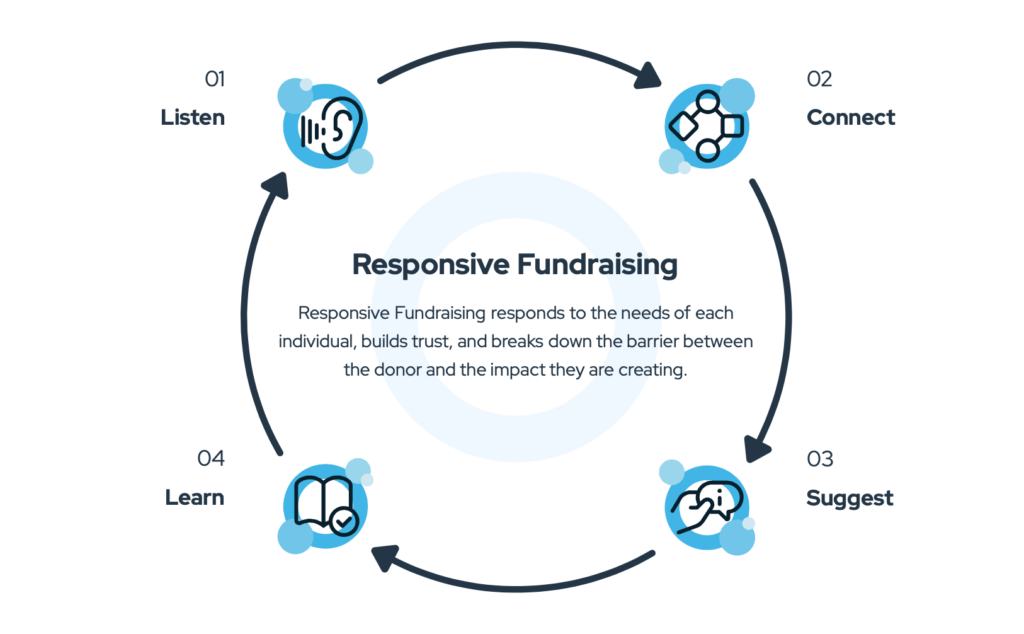
Responsive fundraising puts the donor at the center of fundraising and grows giving through personalized donor journeys that respond to the needs of each individual. AI in nonprofit work, especially predictive AI, can help seamlessly build these journeys through segmentation, next-best asks, nurture campaigns, and more. The responsive approach builds trust and loyalty through personalized engagement, and using AI within the model allows you to focus on those relationships.
How to Get Started with AI in Nonprofit Work
- Identify Pain Points: Determine areas in your organization where AI can address challenges, such as donor retention or reporting.
- Start Small: Try an AI tool for a specific task, like donor segmentation or grant writing. You don’t need to go all in right away.
- Train Your Team: Provide training on AI tools so your staff is confident and capable.
- Measure Impact: Regularly evaluate the effectiveness of AI solutions and refine your approach as needed. You might find that you only get value out of certain areas. That’s OK! It’s all about finding what works for you.
By thoughtfully and strategically embracing AI in nonprofit work, organizations can work smarter, not harder, to achieve their missions. Whether through personalized donor engagement, efficient grant writing, or impactful program evaluation, AI offers amazing opportunities to amplify your impact and change the world.