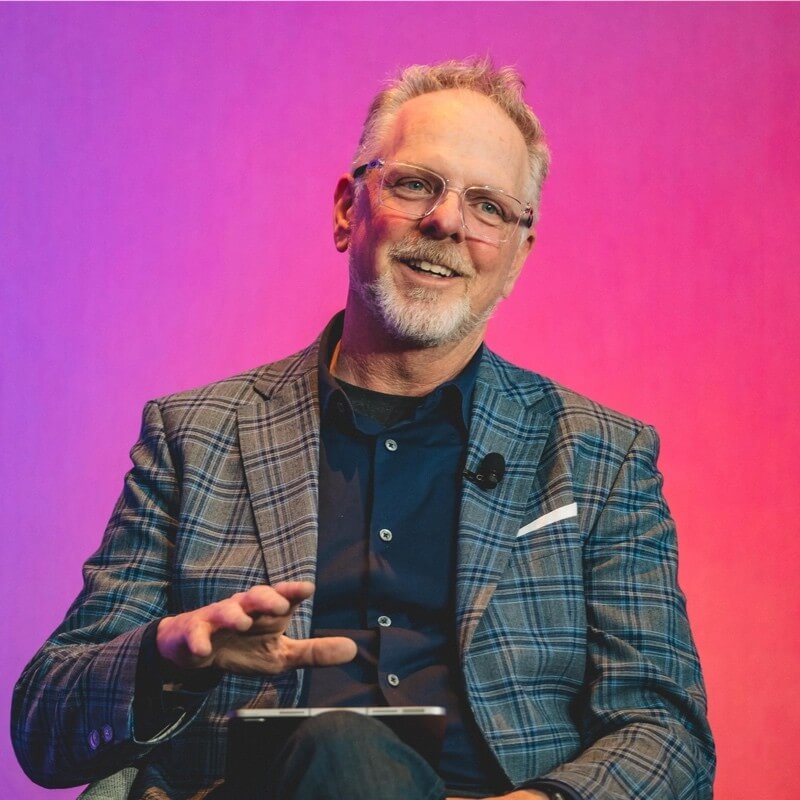
About once a month, I host a gathering of nonprofit and social impact leaders that I call a Dinner of Extraordinary Humans. The rules are simple: phones off, real food, real conversation. Part of it is selfish. In a world that moves at the speed of algorithms, I need a place where people slow down, break bread, and remember what it feels like to be truly heard.
As part of each dinner, I facilitate a conversation about AI, values, and the future of generosity. I ask a lot of questions, but one in particular has started to reveal a pattern I can no longer ignore.
What keeps you up at night?
I’ve been hosting these dinners for a while now, and the answers have shifted. Early on, people talked about budgets, boards, and burnout.
Lately, the answers have converged around something deeper and harder to name. In different stories and different words, more and more people are circling the same quiet fear:
→ Will my role still exist in five years?
→ How do I stay relevant when the ground keeps moving?
→ What really matters now for my career?
I want to be honest with you. I am not immune to this. Even though I work in deep AI every day, I think about relevance constantly. I get calls, emails, and DMs from friends of friends, from LinkedIn connections, from people I’ve met once at a conference, all asking some version of the same question: What advice do you have for me?
It reminds me of something that happened years ago, when I was serving as Associate Vice Chancellor and had just taken on an expanded role with significant new responsibility. I was struggling to help my team navigate the change, so I turned to my leadership coach, Lolly Daskal. She told me something I’ve never forgotten.
In times of change, she said, people really only care about two things: How does this affect me? and Is my job safe?
That was true then. It is exponentially true now.
Reframing the Conversation
Here’s the thing about the phrase “change management.” People hear it and immediately brace for impact. It conjures layoffs, restructuring, the slow bureaucratic grind of something being done to you rather than for you. I want to reframe the conversation entirely.
What we’re really talking about is future-proofing. Not in the Silicon Valley, move-fast-and-break-things sense.
In the deeply human sense.
This is an investment in your future self. It is perpetual, not a one-time exercise. It requires honest introspection. And it requires curiosity with urgency.
In the past, “staying ahead” might have meant being several steps in front of the curve.
In 2026, staying one step ahead is a monumental feat. That’s not a reason for despair. It’s a reason to be intentional.
What follows are ten practices I return to regularly, both for myself and when fundraisers and nonprofit leaders ask me for advice. They are not theoretical. They are things I do, or try to do, in a world that changes its definition of “useful” almost weekly.
10 Ways to Future-Proof Your Nonprofit Career
1. Treat AI as a Collaborator, Not a Competitor
The nonprofit professionals who will thrive are not the ones who outrun AI. They are the ones who learn to think alongside it.
This means moving beyond fear and into partnership. Learn what AI does well. Learn where it falls short. Develop the instinct for when to trust its output and when to override it.
The goal is not to become a technologist. The goal is to become a better version of yourself, amplified by tools that didn’t exist three years ago. Make a conscious decision to play with AI for 30 minutes a day. Don’t seek perfection, beauty, or utility. Just play.
If you want to see where the sector actually stands on AI adoption today, our 2026 Nonprofit AI Adoption Report is a good place to ground yourself before you start experimenting.
2. Name Your Human Edge
AI can process, predict, and produce at extraordinary speed.
What it cannot do is care.
It cannot sit across from a grieving donor and know when to stop talking. It cannot feel the weight of mission in a room full of volunteers. Empathy, moral judgment, relational intuition, the ability to hold complexity without rushing to resolution – these are your edges.
Name them.
Sharpen them.
They are more valuable now than they have ever been.
3. Build AI Literacy, Not AI Expertise
You don’t need to become a data scientist. But you do need to understand enough about how AI works to make informed decisions about when and how to use it.
Literacy reduces fear. It also protects you. When you understand the basics – how models are trained, what bias looks like, where hallucinations come from – you stop being a passive consumer and start becoming a thoughtful operator.
Tools like Virtuous Momentum are designed with this in mind, putting AI-powered recommendations, like intelligent outreach suggestions, directly into the workflows fundraisers already use, so literacy translates into action.
4. Exercise Adaptability Like a Muscle
The half-life of a professional skill is shrinking.
What got you here may not get you there, and “there” keeps moving. Adaptability is not a personality trait reserved for the naturally flexible. It is a discipline.
It is practiced by saying yes to the unfamiliar assignment, by volunteering for the pilot program, by building the habit of learning something new every quarter – not because it’s on your performance review, but because your future depends on it.
5. Advocate for Ethical AI – Starting With Your Own Organization
This is personal to me. I co-founded Fundraising.AI on the principle that just because you can doesn’t mean you should.
Every organization deploying AI has a responsibility to ask hard questions about bias, transparency, consent, and unintended consequences. You don’t need a title to raise those questions. In fact, the professionals who raise them early are the ones who will be trusted most when the stakes get higher.
Speaking of, an AI policy is at the core of ethical AI use. Learn more about creating an AI policy in my blog, HERE.
6. Step Away from the Screen and Think About Who You’re Becoming
This one doesn’t sound like a career strategy, but it might be the most important item on this list.
Set aside time – real, uninterrupted time – to sit with the deeper questions.
What are your values? What is your passion? How might your role evolve when PhD-level intelligence exists in every subject domain and automation is created by speaking a few words to your computer?
The future will reward people who have done the inner work of knowing what they stand for, not just what they can do.
7. Build a Learning Portfolio
Think of every new skill, certification, tool, and experience as a deposit into a portfolio that compounds over time.
The professionals who stay ahead are not the ones who occasionally attend a webinar.
They are the ones who treat learning as an ongoing investment strategy – deliberate, diversified, and aligned to where the world is heading, not where it has been.
For a regular cadence of learning about AI and technology in fundraising, I recommend The Responsive Lab Podcast, where we explore these questions every week with the people living them.
8. Learn to Tell Your Own Story
In a world where AI can generate a resume, write a cover letter, and draft a LinkedIn summary in seconds, your ability to articulate your own evolving value becomes a differentiator.
This is not about personal branding in the performative sense. It is about developing the clarity to explain, in your own words, what you bring to a room that a machine cannot.
Craft that narrative. Refine it. Let it evolve as you do.
9. Break Bread With Extraordinary Humans
There is a reason I keep hosting those dinners. The relationships that matter most in times of disruption are not transactional. They are built over shared meals, honest conversations, and the willingness to be vulnerable about what you don’t know.
Your network is not a spreadsheet. It is a living, breathing ecosystem of people who sharpen your thinking, challenge your assumptions, and open doors you didn’t know existed. Invest in it the way you would invest in anything that matters.
10. Practice Curiosity With Urgency
I’ve written about curiosity as a superpower before, and I believe it more deeply every day.
But curiosity alone is not enough anymore. It needs a companion: urgency.
Not panic. Not reactivity.
The kind of urgency that says, “The world is not going to slow down for me, and my future self is counting on the choices I make today.”
Ask questions. Experiment. Stay uncomfortable. And do it now, because the window for gentle onboarding into the future is closing faster than most people realize.
Care About the Future Enough to Stay Awake for It
None of this is about becoming someone you’re not.
Future-proofing is not about abandoning who you are.
It is about becoming more fully who you are, with better tools, sharper instincts, and a deeper commitment to the work that matters.
I live in a constant state of feeling like I can be replaced. That may sound bleak, but it isn’t. It’s a healthy fear. A productive humility. A quiet agreement with reality that says relevance is not a trophy you win once – it’s a practice you renew.
The next time someone asks me what keeps me up at night, I think my answer will be the same as yours. Not because we are failing, but because we care enough about the future to stay awake for it.
If you’re ready to put this into practice, Virtuous Insights and Virtuous Momentum are two of the ways we’re helping nonprofits pair human intuition with AI-driven intelligence, so the work you care about reaches the people who care back.

Virtuous Insights puts AI-powered donor intelligence directly into your team’s hands, surfacing giving patterns, identifying at-risk donors, and recommending next steps so you spend less time digging through data and more time building relationships that matter.
See Virtuous Insights in action — request a demo.

Virtuous Momentum is an AI-powered fundraising assistant that lives in your inbox, helping you prioritize outreach, draft personalized emails, and automatically log activity back to your CRM so you can manage larger portfolios, build stronger donor relationships, and grow giving over time.
See Virtuous Momentum in action — request a demo.