- The board’s job in a capital campaign has two parts: governing the campaign as a group and giving and helping as individuals.
- Asking board members to give works best as a face-to-face conversation about a “stop and think” gift, with no fixed formula.
- 100% board participation during the quiet phase builds the credibility that other funders look for.
- Board members who dislike asking can still help by writing thank-you notes, hosting events, and making connections.
- Small nonprofits can run campaigns too, and a campaign leaves behind a stronger board, deeper donor relationships, and better systems.
When a capital campaign shows up on the horizon, many board members have the same first reaction. They often assume they’ll have to go ask everyone they know for money.
For the staff leader who has to bring the board along, that assumption makes the board’s role in a capital campaign a topic that needs a clear answer. How do you ask board members to give? What happens when they tell you “we’re good”? Where do they actually fit?
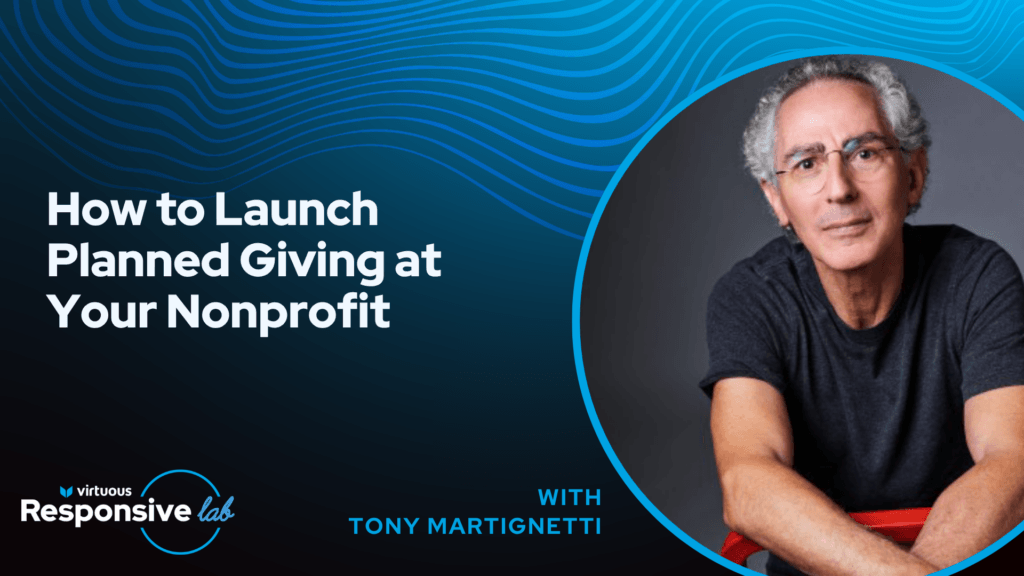
This post answers those questions. It comes from a conversation on The Responsive Lab, our podcast about fundraising, technology, and nonprofit leadership, where host Scott Holthaus talked with Sarah Plimpton, Vice President and Chief Happiness Officer at Capital Campaign Pro and co-author of The Board Member’s Guide to Capital Campaign Fundraising. Sarah has spent more than 20 years working on campaigns as a consultant, development director, advisor, and coach.
We covered what the board owns, how to approach board gifts, why the quiet phase matters so much, and what a campaign leaves behind once it closes.
2 Ways to Think About the Board’s Role in a Capital Campaign
The board has two jobs in a capital campaign:
1) govern the campaign together
2) and show up as individuals.
It helps to picture them as two columns.
Column 1: The Board as a Governing Body
The board is charged with the vision and the future of the organization. In a campaign, that means every board member needs to understand and believe in the case for the campaign.
The board should be able to answer a few questions clearly:
- What are we doing?
- Why does it matter?
- What impact will it have?
- Why are we doing it now?
The second part of the collective role is governance, which looks a lot like the board’s work everywhere else. For a capital campaign, the board settles:
- The case for support. What are we raising money for, and what are we not raising money for?
- What counts. What counts in this campaign, and what doesn’t?
- The working goal. Are we building this for $10 million, $15 million, or $20 million?
- The campaign budget. What are we allocating to staff to raise the money we need?
- Policies. What policies will the campaign run under?
Column Two: Each Board Member as an Individual
Individual roles come in two layers. First, every board member makes a meaningful gift to the campaign when the time comes.
Second, each board member learns about all the ways a campaign needs support and picks the one that suits their personality. Some people are great at asking for money, and they should go for it. Others shine in different spots:
- Writing thank-you notes (a campaign needs a lot of them)
- Hosting events
- Reviewing donor and prospect lists and making relational connections
Solicitation is one way to help among many. A board member who isn’t comfortable asking still has plenty of ways to help.
How to Ask Board Members to Give to a Capital Campaign
The goal for board giving is simple to say: everyone gives, and everyone gives meaningfully. Getting there takes a few shifts in how staff leaders approach the conversation.
Drop the Formula
Take the fixed numbers off the table. That means no rule that every board member gives the same amount, and no target that the board as a whole must generate 25%, 30%, or 40% of the campaign goal.
Every board is different. Every board member has different financial circumstances. There is no way to standardize board giving from one campaign to the next.
Ask for a “Stop and Think” Gift
Most of us have a gift amount that comes easily and reflexively. Sure, I’ll give X dollars, no big deal. That is the wrong amount to ask for in a campaign.
A “stop and think” gift asks each board member to reflect for real. If you had a couple of years to fulfill the total, and you pulled from different assets, what could you give?
Ask Face to Face, One Person at a Time
Approach every board member individually. It doesn’t matter whether you’re asking them to consider a $5,000 gift or a $5 million gift. If they sit on the board, you sit down with them and ask in person.
That rules out the pledge form passed around at a board meeting with a request to bring it back next time. It won’t produce great gifts.
Explain Why 100% Participation Matters
Staff leaders should also explain to the board why 100% participation matters.
The board also establishes credibility. Many funders look to see whether 100% of the board has given, and if the answer is no, people hold back. A board that knows this has a real part to play in inspiring confidence more broadly.
Why the Quiet Phase Is Where Board Members Matter Most
Every phase of a capital campaign has a job to do, and the quiet phase is the most important one. It is where the campaign is won or lost.
During the quiet phase, you focus on a relatively small number of major donors who can make the largest gifts. A campaign might raise anywhere from 70% to 80% of its goal from a pretty small group of gifts, maybe 20, 25, or 30 of them. (For more on how those conversations shape a campaign, see our post on building capital campaigns around real donor conversations.)
Work Inside Out and Top Down
The quiet phase runs on a shorthand strategy: inside out, top down.
- Inside out means you go to your insiders first and work your way outward. Outsiders are the next group you approach.
- Top down means you start at the top of the gift range chart with the biggest gifts and work down to the smallest.
Board members are your ultimate insiders. That makes reaching 100% board participation during the quiet phase hugely important, and it is one thing the board has to nail.
Stay Engaged Through the Quiet Phase
The quiet phase can be a long, hard slog with lots of ups, downs, twists, and turns. Some board members will be deeply involved in the inner workings of the campaign. Others will be less involved.
All of them can pay attention to the process and offer encouragement to the team in the trenches. Beyond encouragement, board members can offer to help in ways they may not be used to:
- Opening doors
- Helping to identify prospects
- Taking part in cultivation meetings and conversations
- Soliciting, in some cases
What to Do When Your Board Isn’t Ready to Step In
Sometimes a campaign starts before the board is ready to engage. Capital Campaign Pro saw this with an animal shelter planning a new facility, with a goal of around $6 or $7 million.
The board was excited about the project. Its members came to community events and helped with PR, but they had never been involved in major gift fundraising. When the quiet phase began, they were at the wheel but not fully ready.
What Turned It Around
Here is how the shelter changed course:
- The executive director went to the board chair. With help from Capital Campaign Pro, she explained what she needed from the board and from him, and that she couldn’t do this alone.
- The board chair took it on. He understood the assignment.
- The team designed exercises for the next board meeting. The exercises, which included visioning, got board members engaging with the case rather than sitting in receiving mode.
- The chair made it personal. He told the board the campaign started with them, that they would each have an individual conversation, and that it wasn’t going to be scary. He also made it clear that he and the executive director needed each of them.
- The chair joined the solicitation process. The conversations also helped the executive director and the chair practice soliciting.
A couple of board members still took extra work to schedule. Over time, people fell in line, and the campaign gained some real champions.
We’d translate this into practice by spelling out the specific role each board member is being asked to play.
Can a Small Nonprofit Run a Capital Campaign?
Yes. A capital campaign doesn’t require a huge development department or a huge budget.
The better way to define it is as a strategic, specialized way of raising significant money for an important and specific purpose. The size is relative. Your goal might be $1.5 million or $2 million, and for another organization it could be $200 million.
A campaign is also a growth opportunity. Something compelling is on the horizon, and the funding lets your organization do it or become it.
Where Leaner Shops Have the Advantage
Leaner organizations bring a few strengths to a campaign:
- Less to coordinate. Fewer moving parts make the work simpler to manage.
- More nimble. Leaner organizations can sometimes move faster than the really big shops.
- Closer to their donors. They often know their donors differently, and sometimes better, than the really big organizations do.
- A case that resonates locally. If you’re part of a community, your case for support often lands in your donors’ own lives.
What a Capital Campaign Leaves Behind
A good campaign leaves an organization stronger, and funded. Think of it as a Trojan horse. You come in for a new building or a new program, and you get a bunch of other things too.
A year after the campaign closes, you can look for these changes:
- A board that understands fundraising differently. Members are more comfortable talking about fundraising, and about donors, and with donors.
- Deeper relationships with top supporters. You know your donors better, with more rapport and trust built.
- New supporters. You’ve likely identified and engaged people you didn’t know, or didn’t know well, before the campaign.
- Donors who moved up. Some of your steady annual donors have probably moved into major donor territory.
- A more systematic approach to prospects. Your staff manages the prospect pool more strategically, with better systems, better data, and better habits.
- A stronger fundraising muscle. Two to three years of campaign work is a lot of reps in the gym.
- Fluency about the future. Your team is probably more fluent in talking about where the organization is headed.
If you’re putting this much time and resource into a campaign, you want the echo of it to last beyond the campaign itself.
Putting the Board’s Role in a Capital Campaign Into Practice
The board’s role in a capital campaign comes down to two things: governing the campaign together and showing up as individuals. Each board member makes a meaningful gift, asked for face to face, and then finds the way to help that fits them. During the quiet phase, the goal is 100% participation, because the board sets the pace for everyone else.
The quiet phase runs on relationships with a small group of major donors. Virtuous Momentum supports major gifts teams with donor planning and moves management, and Virtuous CRM+ keeps your donor data and fundraising activity together in one system.
Frequently Asked Questions
What is the board’s role in a capital campaign?
The board has a collective role, which covers the campaign’s vision and governance, and an individual role, which starts with a meaningful gift. Each member then supports the campaign in a way that suits their personality.
Do board members have to ask for money in a capital campaign?
Not necessarily. Asking is one option among many, and members can also write thank-you notes, host events, or review donor and prospect lists to make relational connections.
How much should each board member give to a capital campaign?
There is no set amount. Staff leaders should aim for every board member to give meaningfully, which means a “stop and think” gift that reflects what they could give over a couple of years from different assets.
Why does 100% board participation matter?
The board sets the pace for everyone else and establishes credibility. Many funders look to see whether the whole board has given, and people hold back if it hasn’t.
Why is the quiet phase the most important phase of a capital campaign?
The quiet phase is where a campaign is won or lost. A small number of major gifts can account for 70% to 80% of the goal, and board members are the ultimate insiders.
Can small nonprofits run a capital campaign?
Yes. A capital campaign is a strategic way to raise significant money for a specific purpose, and it can work at any goal size. Smaller organizations can also move faster and often know their donors well.