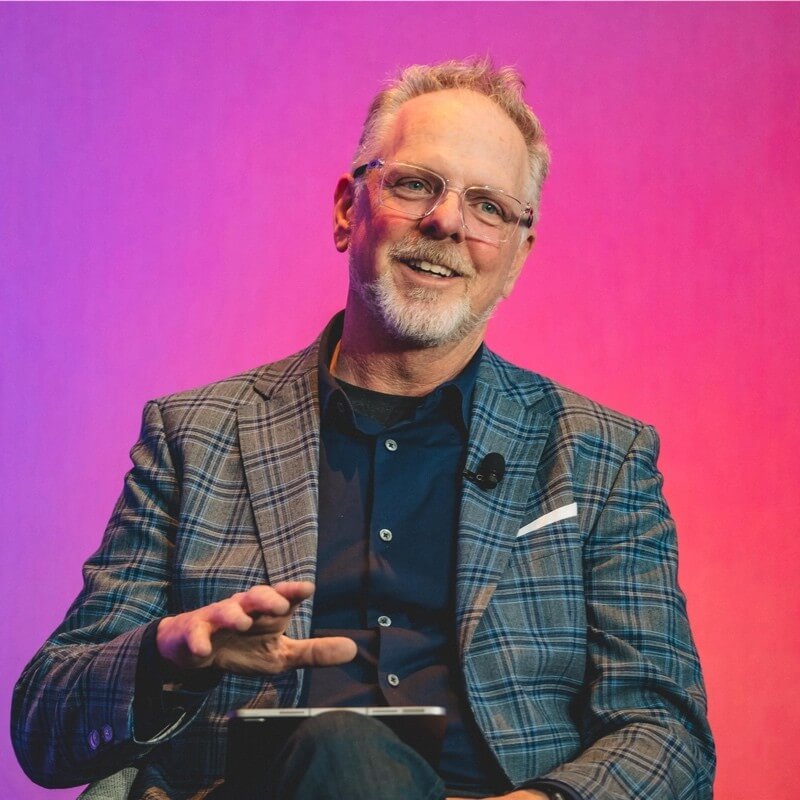
A few weeks ago in Nashville, in a room deliberately kept small, Gabe Cooper and I launched our new book, N1 Philanthropy, into the world. I expected to spend the night talking about artificial intelligence. Instead, I heard the same confession from fundraisers all evening, phrased a dozen different ways: we were trained to do this work relationally, and then handed systems that made relationships a luxury good, reserved for the top of the file.
The idea behind the book began twenty years earlier, in my healthcare fundraising years at UC San Diego, where I worked down the hall from a revolution. Precision medicine was dismantling the idea of the average patient, one genome at a time. Researchers there talked about the N of 1: a single person whose biology and history demand care designed for them alone. The question I could not answer then was why the same institution that refused to average its patients was perfectly comfortable averaging its donors.
Years later, when my team applied machine learning to our full donor file, the data made the question urgent: wealth, the signal our entire prospecting apparatus was built on, predicted giving with less than 10 percent correlation. We had been screening for capacity when the real signals looked like gratitude, engagement, and connection.
Donors were telling us what mattered to them, but the systems we relied on weren’t built to hear every signal. It’s a problem most orgs have experienced, called the Great Donor Ignore: the gap between what supporters tell us through their actions and what our organizations have the capacity to recognize and respond to.
While I was chasing that thread, Gabe was building the answer’s other half. Responsive fundraising, the framework at the heart of his books and of Virtuous itself, gave the sector a rhythm:
- Listen to what donors are telling you
- Connect around what you heard
- Suggest the right next step for their reasons rather than your calendar
- Learn by testing your processes and continuously improving.
It was, and remains, the correct instinct. Every fundraiser who has ever handwritten a note to a first-time donor knows it in their bones.
Responsive Fundraising gave organizations a way to turn that belief into practice. Segmentation made outreach more relevant. Donor journeys created opportunities to respond to people’s interests and behaviors. Each step brought us closer to the kind of individual attention that builds lasting relationships.
And from the beginning, the vision reached further. What if we could listen and respond to every signal, from every donor, continuously? What if the same care we bring to our closest relationships could extend across the entire donor file? The ambition was always there. The technology to make it possible at scale was still catching up. A gift officer can truly know only so many people, and the rest of the file received the industrial version of care: right message, right time, per segment. Not because anyone believed in segments, but because per-person was unaffordable.
N1 is responsive fundraising with the ceiling removed.
The book’s argument is not that the responsive model needs replacing. It is that the model’s full promise, the version where every supporter gets the listening and the noticing, was waiting on a technology that did not exist when the first responsive book was written.
Now it does.
The unlock is agentic AI.
Predictive AI told us who and when.
Generative AI drafted the what.
Agentic AI is different in kind: it runs the loop continuously, without being asked. It listens while you sleep. Inside Virtuous, our prospecting research tool, Virtuous Insights, rescores every donor daily, reading the signals as they change rather than quarterly, when a human finally pulls the report.
Our portfolio management platform, Virtuous Momentum, takes those signals and aligns outreach to where each person actually is in their journey, so that when a gift officer arrives in the morning, the noticing has already happened: the right people surfaced, the context assembled, the suggested next step drafted and waiting for human judgment.
Consider what that looks like for one donor. Picture a first-time giver, call her Maria, who gives fifty dollars after reading a story about your clean-water program. Three weeks later she comes back on her own: two project updates read, the well video watched to the end. That night, the daily rescore registers what just happened: this is not a lapsing donor; this is a deepening one. The next morning she is at the top of a gift officer’s brief, with her history, her signals, and a drafted check-in that contains no ask, because the right next step for Maria is to be seen, not solicited. The officer reads the draft, rewrites two sentences in her own voice, and sends it. Maria replies within the hour.
No campaign triggered that. A person noticed her. The system made the noticing possible at a scale no human team could sustain alone.
A human is not just in the loop. A human is accountable for the loop. Momentum suggests; it does not send without human approval. Every outreach carries a named person’s judgment and signature, and that is a design principle, not a temporary training phase.
The same machinery that makes N1 possible could, ungoverned, manufacture what Gabe and I call counterfeit generosity: dollars produced by simulated care. The dollar is real. The connection is not. The difference between the two futures is not the model or the vendor. It is whether a human owns every relationship the machine serves, and whether the signals you listen to are ones you would happily explain to the donor they belong to.
So what should fundraisers do now? Resist the urge to start with tools. Start with the numbers your board never sees: your retention rate, your second-gift rate, the share of first-time donors you never hear from again. Across the sector, seven out of ten of them never give again. Then write your values down, pick one donor journey, and let the system begin listening there. In our research across 346 nonprofit organizations, 92 percent reported using AI while only about 7 percent reported meaningful mission impact. The gap was never budget. It is imagination and governance, and both are available to a two-person shop.
At the end of the launch night in Nashville, the line people quoted back to me was not about technology at all. It is the book’s closing refrain: no donors, no prospects, just people.
Responsive fundraising taught our sector to believe that. N1 is the moment we stop rationing it.
The book arrives November 17.